Foam
Foam density: what D21, D30 and D35 cost you in years of use
Updated:
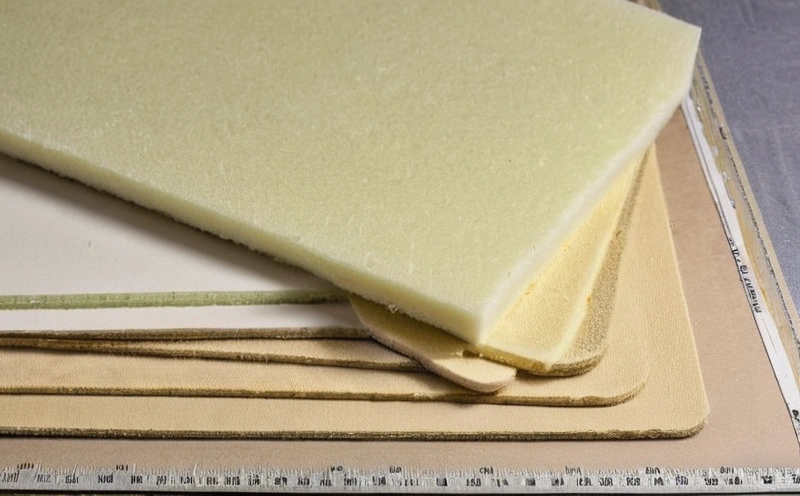
Five polyurethane grades plotted against the month a seat cushion loses 10 percent of original height. Load conditions: one 80 kg adult, 8 hours of sitting per week, 100 mm cushion.
Two separate numbers describe a block of polyurethane foam, and Dubai showroom staff routinely quote one while meaning the other. Density counts the kilograms of polymer inside a cubic metre. Hardness counts the force needed to squash the block. A cushion can be soft and last twelve years, or firm and dead inside twenty months, because foam density and foam hardness move independently of each other.
What does foam density in kg per cubic metre actually measure?
Foam density measures the mass of polyurethane contained in one cubic metre of finished foam, written as kg/m3 or compressed into a grade code such as D21, D30 or D35. One cubic metre of D35 foam weighs 35 kg. One cubic metre of D21 foam weighs 21 kg, so D21 holds 40 percent less polymer.
Polymer forms the cell walls that carry a sitter's weight, and the air inside the cells carries nothing at all. Foam density therefore predicts service life more reliably than any other single figure printed on a cushion spec sheet. ISO 845 defines the laboratory method for apparent density of cellular plastics: weigh a cut specimen of known volume, divide mass by volume, report in kg/m3.
Measuring foam density at home takes five minutes and needs no laboratory. Cut a 100 mm cube from a hidden face of the cushion, weigh the cube in grams on a kitchen scale reading to 0.1 g, then multiply the reading by 1000. A 100 mm cube holds exactly one litre, so 35 g per litre converts directly to 35 kg/m3. A cube weighing 22 g came out of D21 stock whatever the brochure claimed.
How is foam hardness measured, and why is hardness independent of density?
Foam hardness measures the force needed to compress a block, never the polymer mass inside. European and Gulf spec sheets quote CLD, compression load deflection, in kilopascals at 40 percent compression under EN ISO 3386. American sheets quote IFD, the force in newtons a 323 cm2 circular indentor needs to push 40 percent into the sample under ASTM D3574.
A soft seat foam measures around 2.5 kPa CLD, a medium seat foam around 3.5 kPa, and a firm seat foam around 5.0 kPa. Chemists reach any of those three hardness values at any density by changing the isocyanate index and the water content of the mix, which is exactly why a 21 kg/m3 block can feel firm on a showroom floor and still collapse in year two.
European foam suppliers print both numbers in one four digit code: the first two digits give density, the second two give hardness. Grade 3540 means 35 kg/m3 at 4.0 kPa, a firm seat core built to last. Grade 2118 means 21 kg/m3 at 1.8 kPa, a soft cushion heading for a visible dish inside two years of nightly use.
One further ratio separates high resilience foam from conventional foam. Support factor divides IFD measured at 65 percent compression by IFD measured at 25 percent compression. High resilience foam scores 2.4 or higher, conventional foam scores 1.8 to 2.2. A high support factor means the foam gets progressively firmer as the sitter sinks, which is why a high resilience cushion stops the hip before the hip reaches the plywood platform.
Which foam grade suits a seat cushion, a back cushion or a hotel lobby?
Seat cores under daily domestic use need 30 kg/m3 or higher. Back cushions and scatter cushions carry roughly a fifth of the load a seat carries and work at 21 to 25 kg/m3. Contract seating in hotel lobbies and clinic waiting rooms, sat on by 40 or more people per day, needs 40 to 45 kg/m3.
| Grade | Density | CLD hardness | Correct use | 10 percent height loss at | Sheet price, Dubai, July 2026 |
|---|---|---|---|---|---|
| D21 | 21 kg/m3 | 1.6 to 2.0 kPa | Back cushions, scatter cushions, packaging | 24 months | AED 130 |
| D25 | 25 kg/m3 | 2.2 to 2.8 kPa | Comfort layer above a firmer seat core | 4 years | AED 190 |
| D30 | 30 kg/m3 | 3.0 to 3.6 kPa | Mid market seat cushions | 7 years | AED 280 |
| D35 HR | 35 kg/m3 | 3.8 to 4.4 kPa | High resilience seat core, light contract use | 10 years | AED 420 to 560 |
| D45 HR | 45 kg/m3 | 4.6 to 5.4 kPa | Hotel lobbies, clinics, sitters above 110 kg | 15 years | AED 720 to 840 |
Every sheet price in the table covers one 2000 x 1000 x 100 mm sheet quoted by Al Quoz and Satwa foam workshops in July 2026, and the height loss column records sprung.ae field estimates for a 100 mm cushion under one 80 kg adult sitting 8 hours per week. Heavier sitters and longer hours pull every date in that column forward.
High resilience foam, printed on labels as HR, starts at 35 kg/m3 and returns more than 50 percent of the drop height of a steel ball in the ASTM D3574 ball rebound test. Conventional polyether foam returns 30 to 40 percent. The extra rebound is the reason an HR cushion pushes a sitter back up after an hour of television while a 21 kg/m3 cushion keeps the shape of whoever left the room last.
How much height does a cushion lose before the cushion counts as failed?
A new 100 mm seat cushion loses roughly 5 mm of height during the first month as the cell structure settles, a normal loss on every grade. Failure begins once total height loss passes 10 percent, meaning 10 mm on a 100 mm cushion, because the seat surface then dishes and throws the sitter's weight onto the front rail.
Two laboratory tests quantify the same decay that the years column above records in the field. ISO 1856 measures compression set: hold the specimen at 50 percent compression for 22 hours at 70 degrees C, release, then record the permanent height loss, where good seating foam stays under 10 percent. EN ISO 3385 measures dynamic fatigue by pounding the specimen for 80,000 cycles and recording hardness loss and thickness loss.
| Sitter weight | Load per sitting | D21 core fails at | D30 core fails at | D35 HR core fails at |
|---|---|---|---|---|
| 60 kg | Light | 36 months | 10 years | 14 years |
| 80 kg | Reference | 24 months | 7 years | 10 years |
| 100 kg | Heavy | 17 months | 5 years | 8 years |
| 120 kg | Very heavy | 12 months | 4 years | 7 years |
Sitting habits distort the table further than body weight does. A household that always occupies the same end of a three seater puts the whole weekly load on one cushion, so the left seat of a D30 sofa reaches 10 percent height loss around year four while the middle and right cushions still measure within 3 mm of factory height. The result is the familiar three seater with one collapsed end and two untouched ones.
What does replacement foam cost in Dubai, and what should a buyer ask a showroom?
Re-foaming a three seat sofa with a D35 HR core plus a 40 mm polyester fibre wrap cost AED 900 to 1,400 including labour on Al Quoz workshop floors in July 2026. A replacement three seat sofa of comparable size started around AED 6,000 in the same month, so re-foaming saves roughly 80 percent of the outlay.
Two questions settle any showroom conversation about cushion quality. The first question asks for density in kilograms per cubic metre instead of accepting the phrase "high density", which has no numerical definition anywhere in EN or ASTM foam standards. The second question asks whether the quoted grade applies to the seat core or only to the comfort layer. The Dubai sofa buying guide adds other practical checks for comparing showroom models.
The second question exposes the most common cushion specification on the Dubai market: a 25 mm sheet of D35 foam glued over a 100 mm core of D21 foam, sold under the headline figure of the thin top sheet. That build carries 21 kg/m3 under the sitter's hip bones and dishes on the same 24 month schedule as a plain D21 cushion. A shop that answers both questions with numbers is usually selling the better cushion.